
This Martin Luther King, Jr. day, Memphis and Historic Clayborn Temple took the national stage.
On a recent episode of The Chavis Chronicles on PBS, Anasa Troutman, founder of The Big We and Executive Director of Historic Clayborn Temple, joined civil rights leader Dr. Benjamin F. Chavis Jr. for a powerful national conversation about culture, economics, and the future of Memphis.
For the city, it was a moment of pride. For Clayborn Temple, it was an affirmation that the work happening here carries national weight.
“We’re very honored to have one of our nation’s leading cultural strategists,” Dr. Chavis said in introducing Troutman. The conversation that followed centered on Memphis as a place of innovation, possibility, and unfinished work ready to be completed.
Culture as Strategy. Memphis as Blueprint.
During the interview, Troutman traced her journey from a culturally rooted upbringing in Montclair, New Jersey, to becoming a national cultural strategist and eventually planting roots in Memphis. What began as a six-month project to executive produce and co-write a musical about the 1968 Sanitation Workers Strike became a long-term commitment to the city.
That commitment led to the founding and expansion of The Big We.
The Big We is a social enterprise building resources and infrastructure for the cultural economy. It does this through creative placemaking, social entrepreneurship, and storytelling.
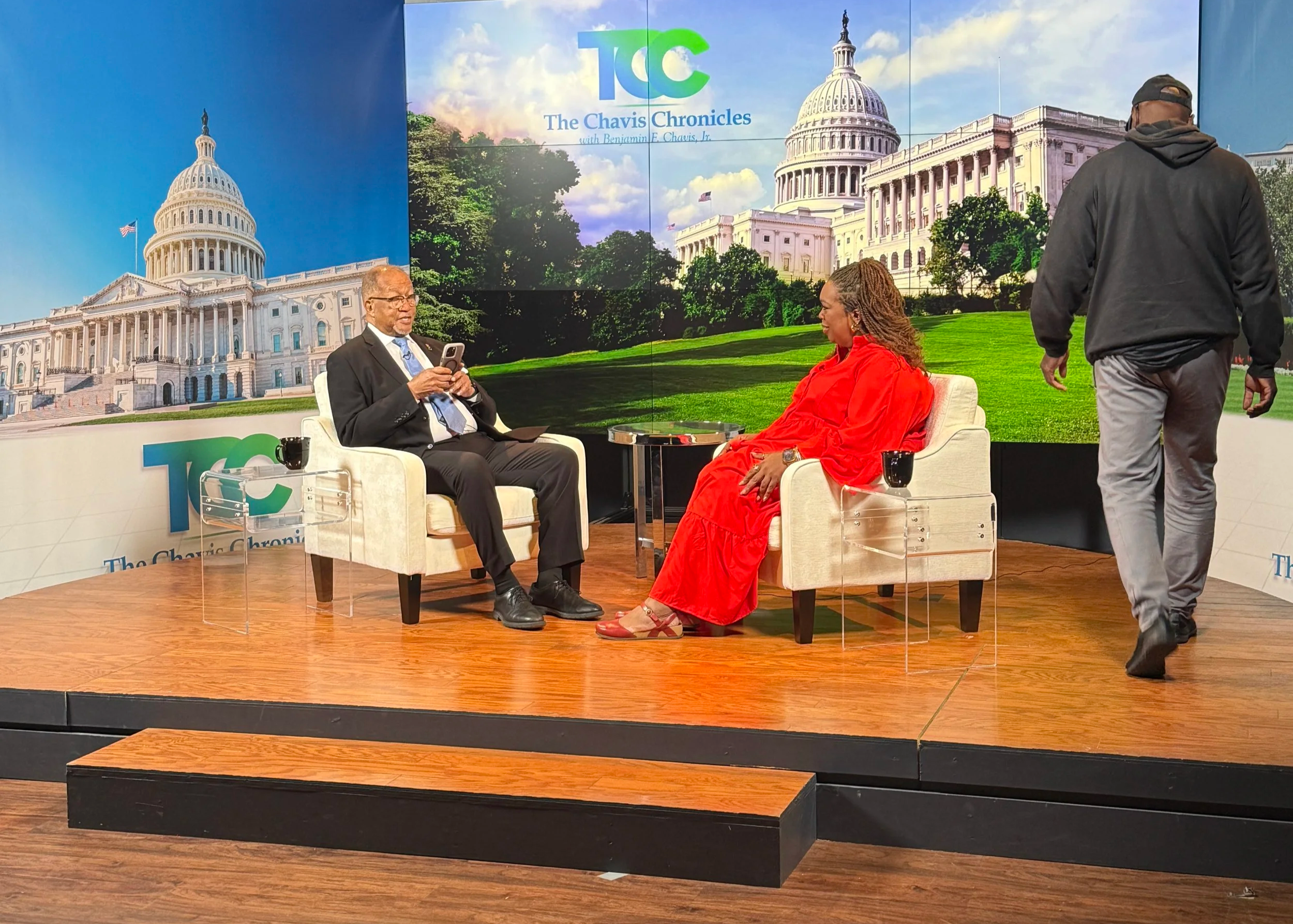
Anasa Troutman behind the scenes on PBS
On PBS, Troutman described cultural strategy as more than storytelling. It is about turning stories into action.
“If you’re a cultural strategist, you’re thinking about the mechanisms that we need to be able to turn those stories and those values and those lessons into actual behavior change,” she explained.
The conversation positioned Memphis as a city where culture and economy intersect in transformative ways. With 65 percent of its population identifying as African American, Memphis holds a unique cultural concentration and influence. Troutman emphasized that the city’s music, innovation, and organizing legacy continue to shape American culture.
“Memphis has a very important role to play in our country and our world,” she said.
Clayborn Temple at the Center
A significant portion of the interview focused on Historic Clayborn Temple, the organizing headquarters of the 1968 Sanitation Workers Strike and the last place Dr. Martin Luther King Jr. worked before his assassination.
Troutman shared how walking into Clayborn Temple for the first time in 2016 changed her life. The building’s energy, history, and unfinished vision called her into deeper work. In 2019, she raised the capital necessary to purchase the building and build an organization around it.
When asked about the devastating arson that severely damaged Clayborn Temple in April 2025, Troutman spoke with clarity and resolve.
“Not only will the building be rebuilt,” she said, “but we’ll have three very powerful things happening in the building at once when we reopen.”
The vision includes an immersive exhibit where visitors experience the story of the sanitation workers firsthand, a fully restored sanctuary rebuilt to reflect its historic form, and a Center for Innovation focused on the intersection of culture and economics.
The message was clear: Clayborn Temple remains central to Memphis’ future.
Pride, Possibility, and Progress
The interview did more than recount history. It presented Memphis as a model.
Troutman described a vision rooted in Dr. King’s concept of the beloved community and expanded into economic innovation. She spoke about leveraging cultural assets for economic, civic, and narrative power so communities can own their stories, neighborhoods, and futures.
When Dr. Chavis asked what gives her hope, her answer resonated far beyond the studio.
“I know we can do it,” she said. “I know it’s possible. Possibility is what keeps me up in the morning.”
For Memphians, seeing this vision articulated on a national PBS platform signals something important. The work unfolding at Clayborn Temple is not isolated. It is part of a broader national conversation about culture, ownership, and shared prosperity.
Memphis continues to shape the country. Clayborn Temple continues to stand as a civic and cultural anchor. The Big We continues to build infrastructure for the cultural economy. And now, the nation is watching.
The full PBS episode is available online.